

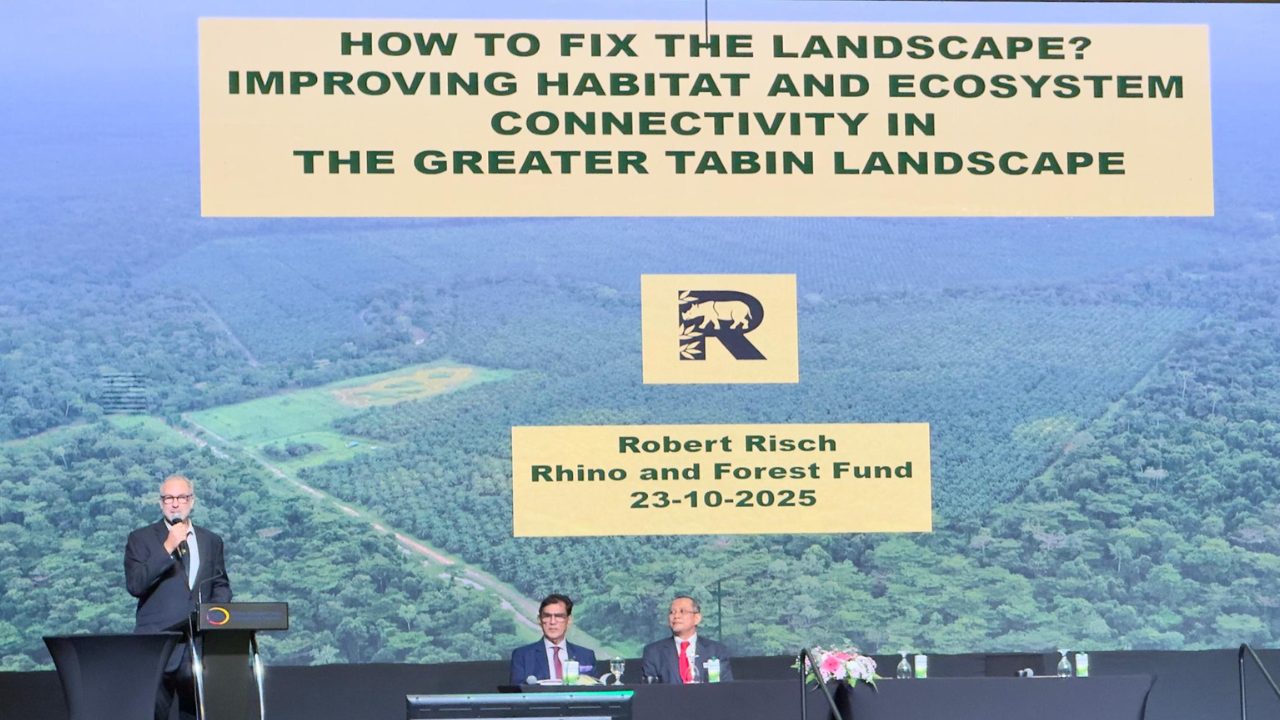
The Sabah Forestry Department hosted the 𝗜𝗻𝘁𝗲𝗿𝗻𝗮𝘁𝗶𝗼𝗻𝗮𝗹 𝗖𝗼𝗻𝗳𝗲𝗿𝗲𝗻𝗰𝗲 𝗼𝗳 𝗕𝗼𝗿𝗻𝗲𝗼’𝘀 𝗚𝗿𝗲𝗲𝗻 𝗛𝗲𝗮𝗿𝘁: 𝗔𝗱𝘃𝗮𝗻𝗰𝗶𝗻𝗴 𝗖𝗹𝗶𝗺𝗮𝘁𝗲 𝗥𝗲𝘀𝗶𝗹𝗶𝗲𝗻𝗰𝗲, 𝗖𝗼𝗻𝘀𝗲𝗿𝘃𝗮𝘁𝗶𝗼𝗻 𝗮𝗻𝗱 𝗦𝘂𝘀𝘁𝗮𝗶𝗻𝗮𝗯𝗹𝗲 𝗟𝗶𝘃𝗲𝗹𝗶𝗵𝗼𝗼𝗱𝘀 on the 𝟮𝟮-𝟮𝟯 𝗢𝗰𝘁𝗼𝗯𝗲𝗿 𝟮𝟬𝟮𝟱 at the Sabah International Convention Centre, Kota Kinabalu
This event gathered experts and professionals from policy and decision makers, government agencies, non-governmental organizations (NGOs), community-based organizations (CBOs), civil society, research and financial institutions, private sectors to actively discuss on Climate Action in Tropical Rainforest Landscapes, Protected and Conserved Areas, Biodiversity Conservation and Sustainable Resource Use.
Among the invited speakers was Robert Risch, director of the Rhino and Forest Fund , who took the opportunity to talk about the significance of the Greater Tabin Landscape and how to fix the landscape connecting the key biodiversity areas in East Sabah through wildlife corridors. Showing the small and fragmented leftovers of the lowland forests highlighted the urgent need to protect what is left, to enhance, what has been degraded and to reconnect, what has been fragmented, in order to save biodiversity in one of the richest areas of the planet.