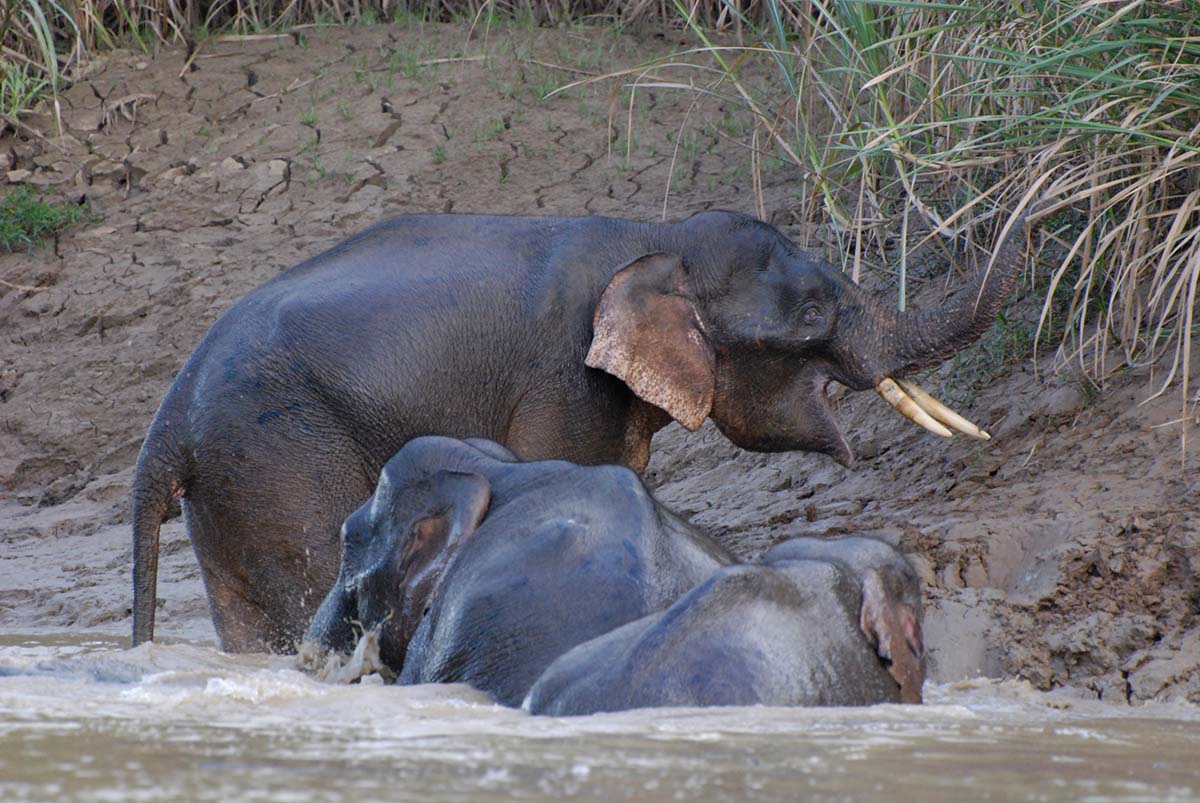

In the dense rainforest of Borneo, Pygmy Elephants and wild boars play a key role in the delicate structure of the ecosystem. Such conspicuous large animals often stand at the centre of conservation measures. By maintaining suitable habitats for them or connecting new protected areas with one another, the survival of countless smaller, inconspicuous species is secured at the same time. How other animal groups benefit in this way can be impressively demonstrated by looking at Borneo’s amphibians.
Amphibian Diversity in Borneo’s Rainforest
Over millions of years, an impressive diversity of anurans (frogs and toads) has evolved on Borneo. The island is estimated to be home to more than 210 amphibian species, many of which are endemic, meaning they occur only here.
Even today, new species are regularly being discovered and described. These animals are adapted to a wide variety of habitats—from the hot and humid lowland forests to mountain regions over 2,000 m above sea level.
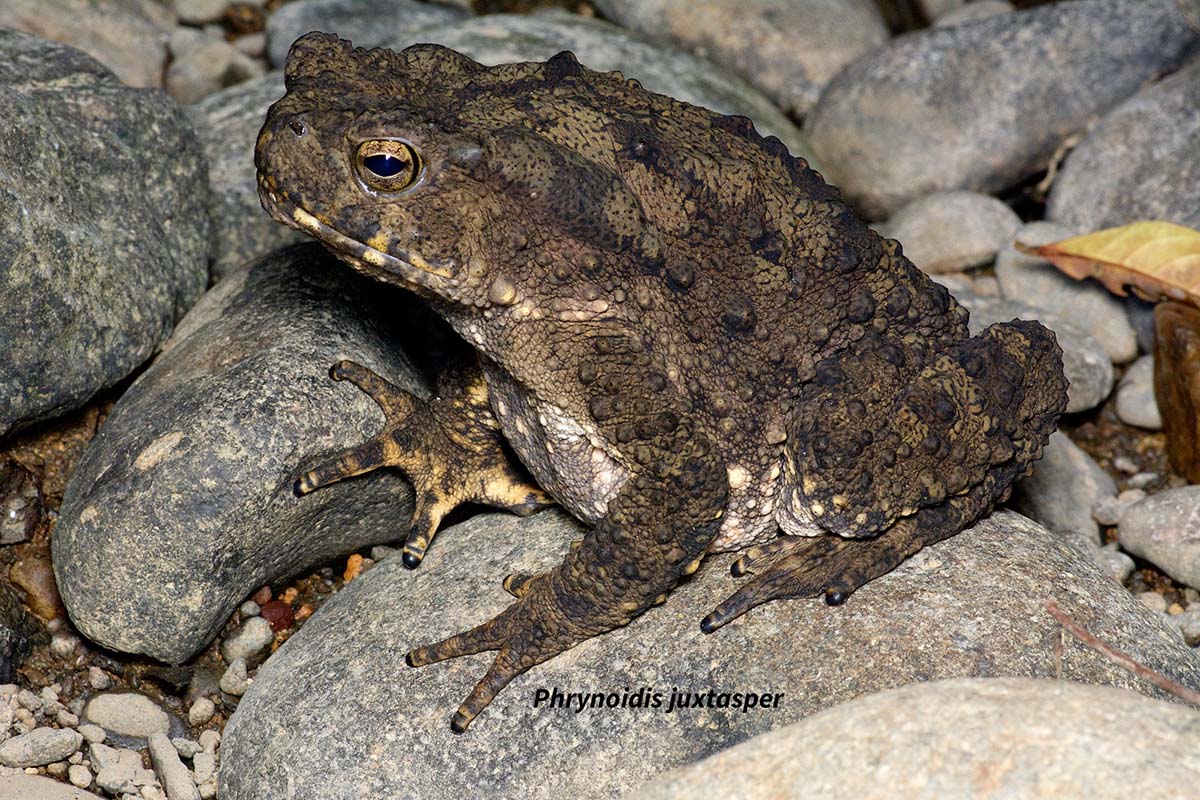
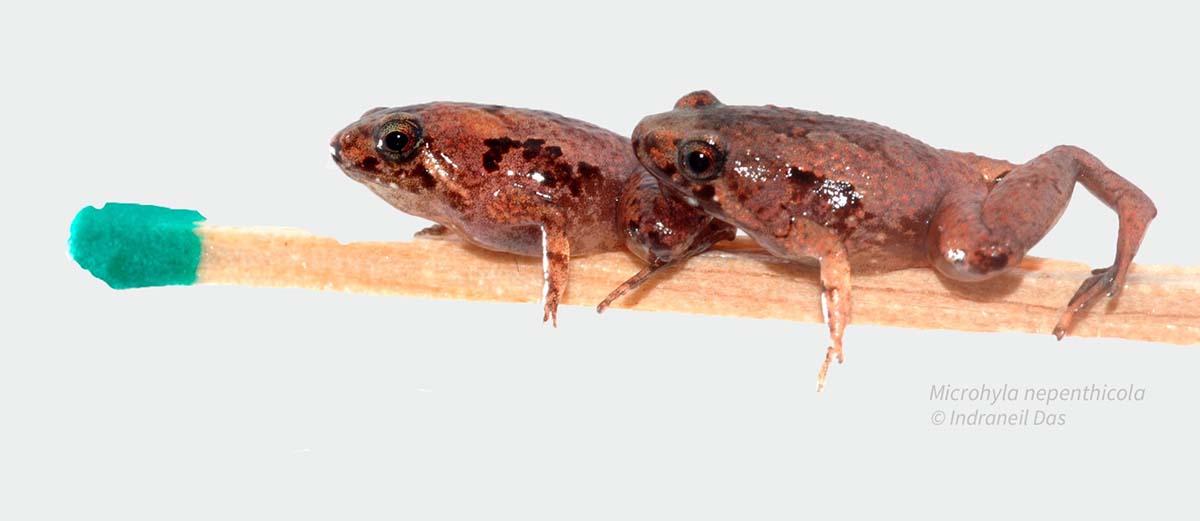
Many species are small, some tiny, like the males of the Nepenthes narrow-mouthed frog (Microhyla nepenthicola), which are only 11 mm in size. In contrast, the island’s largest anurans, the Giant River Toads (Phrynoidis juxtasper), reach almost the size of a rabbit.
Gliding frogs and masterful camouflage
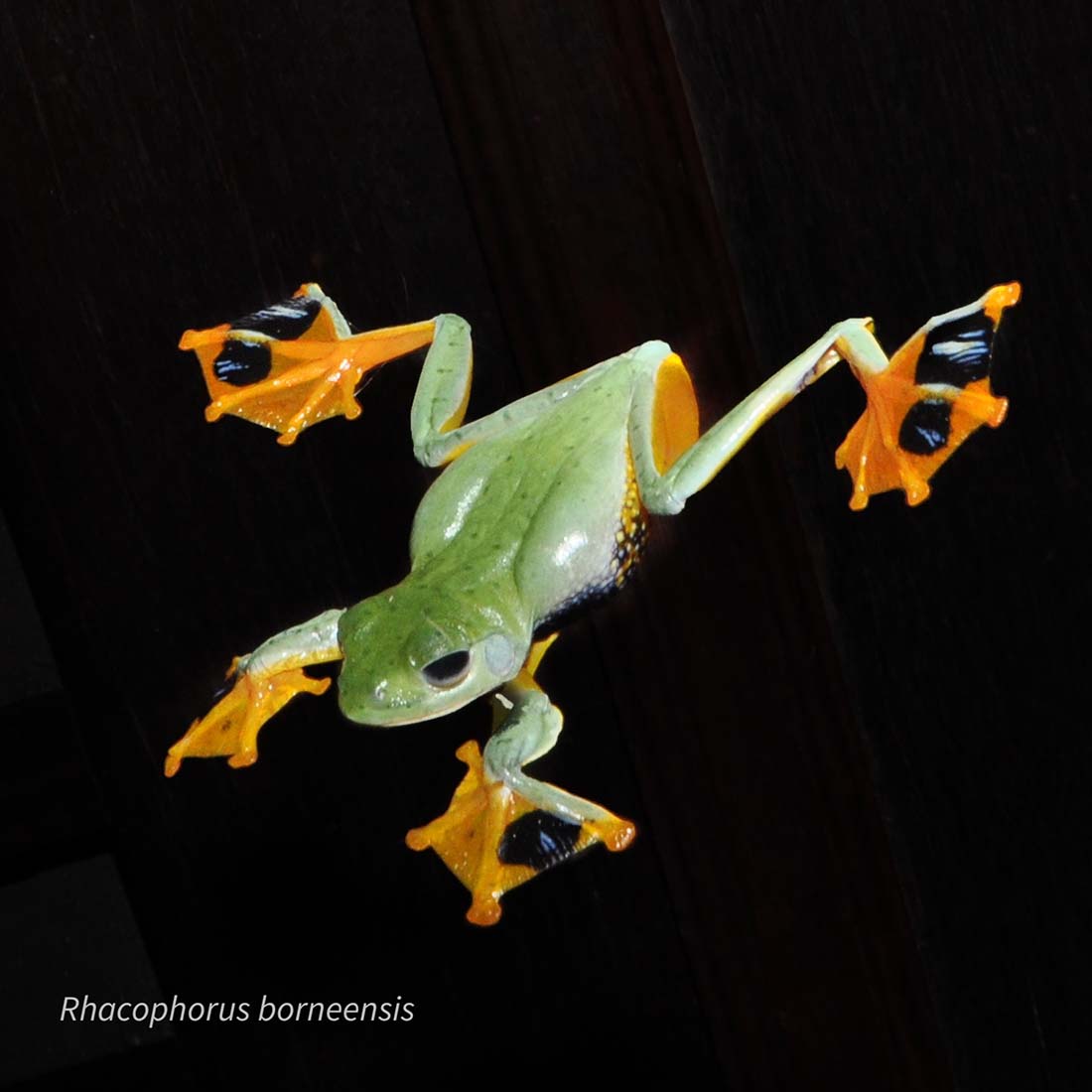
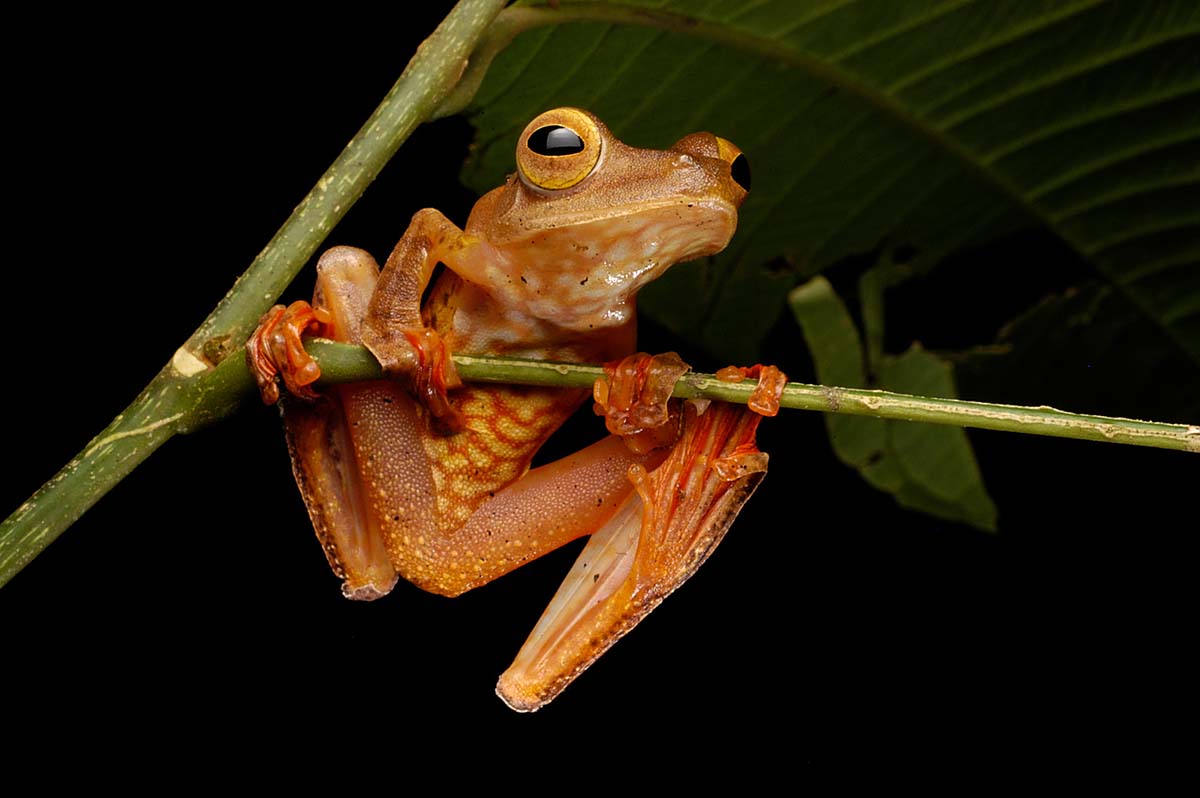
A special feature of Borneo is the diversity of gliding animal species that have evolved the ability to “fly” over the course of evolution: flying squirrels, flying lizards, snakes — and also the flying frogs of the genus Rhacophorus. They spread the skin between their fingers and toes, enabling them to glide elegantly from tree to tree.
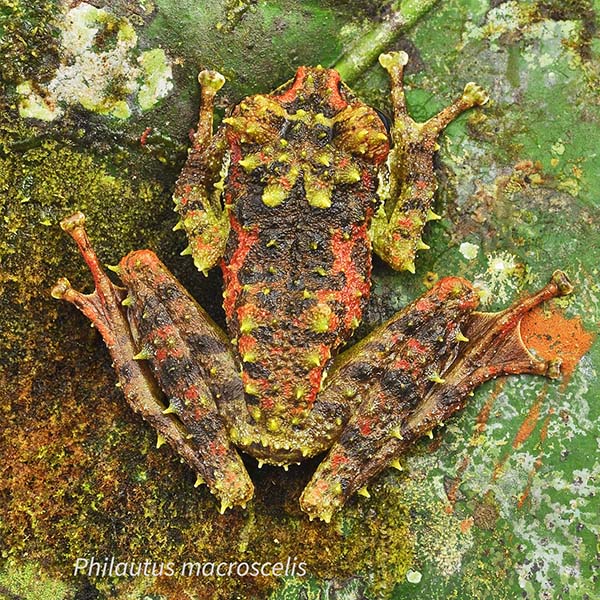
The shapes and colors of the anurans are extremely diverse. Since frogs are hardly capable of defense, many rely on camouflage: Ground-dwelling species often resemble fallen leaves, while arboreal frogs with leaf- or bark-like coloration and skin texture blend almost perfectly with their surroundings. Species that climb frequently can be recognized by their widened toe and finger tips. Their adhesive pads possess special skin cells and mucus that enable astonishingly strong adhesion, even on smooth surfaces.
Tadpole diversity – life in every drop of water
The tadpoles of Borneo show a remarkable diversity of forms, perfectly adapted to their respective habitats. They inhabit virtually every conceivable water accumulation — from water-filled tree holes and pitcher plants to trickles, streams, and waterfalls, as well as flooded areas and pools. Like their adult relatives, they are mostly nocturnal. During the day, they hide among stones, fallen leaves, or in the upper soil layers of the water body.
An overview of the diversity of Borneo’s frogs and tadpoles, with numerous photos and species descriptions, is provided on the website www.frogsofborneo.org
How elephants help frogs
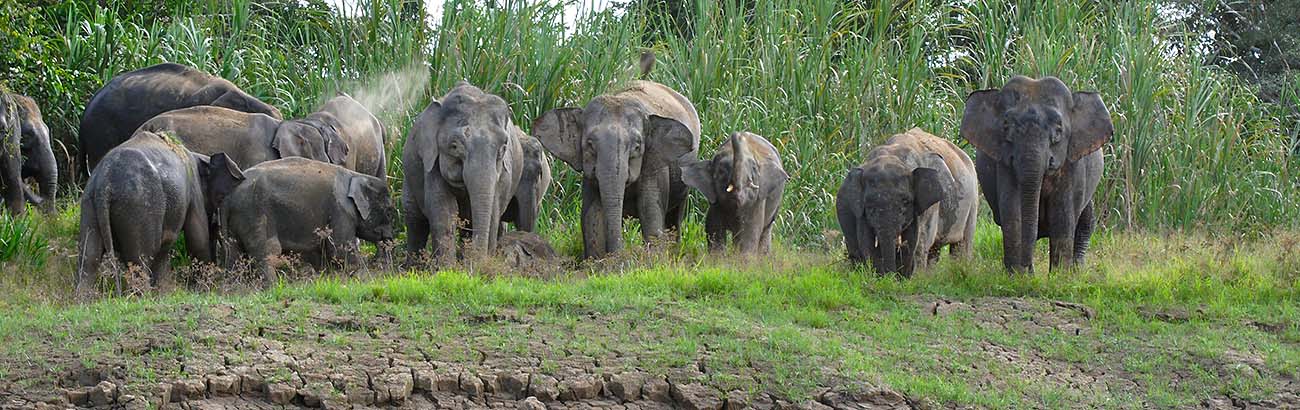
But back to the starting point: How are elephants, wild pigs, and frogs actually connected? Through their activities — wallowing, digging, and turning over the soil — elephants and wild pigs regularly create small waterholes and pools in the rainforest.
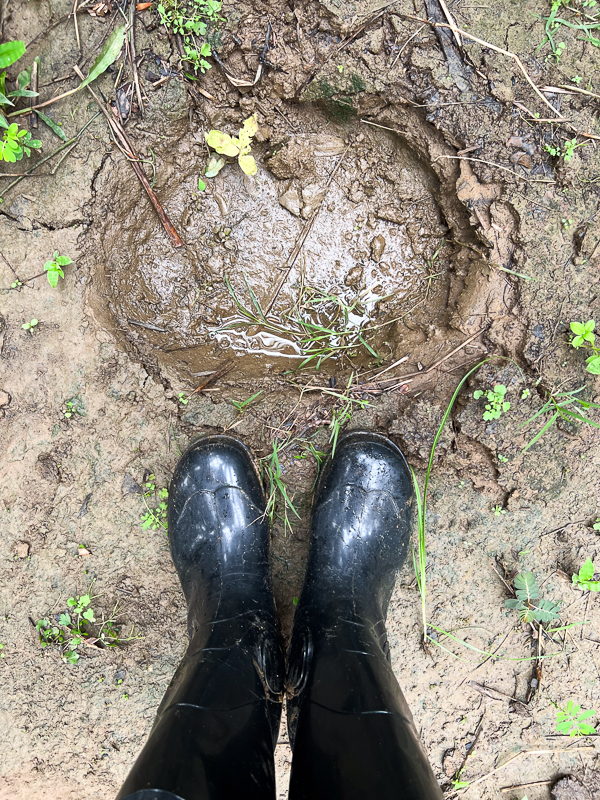
These small bodies of water are vital resources:
They offer suitable, temporary spawning sites for several frog species, which are particularly scarce, especially during the drier seasons.
The puddles created by large animals are usually free of fish and other predators – ideal conditions for the frog offspring.
Fascinating examples from the rainforest
An impressive example is the Wallace’s Flying Frog (Rhacophorus nigropalmatus), as well as the Borneo Flying Frog (Rhacophorus borneensis). Normally, they live high up in the treetops, but for reproduction, they descend to the pools created by elephants and wild boars.
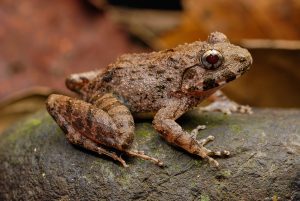
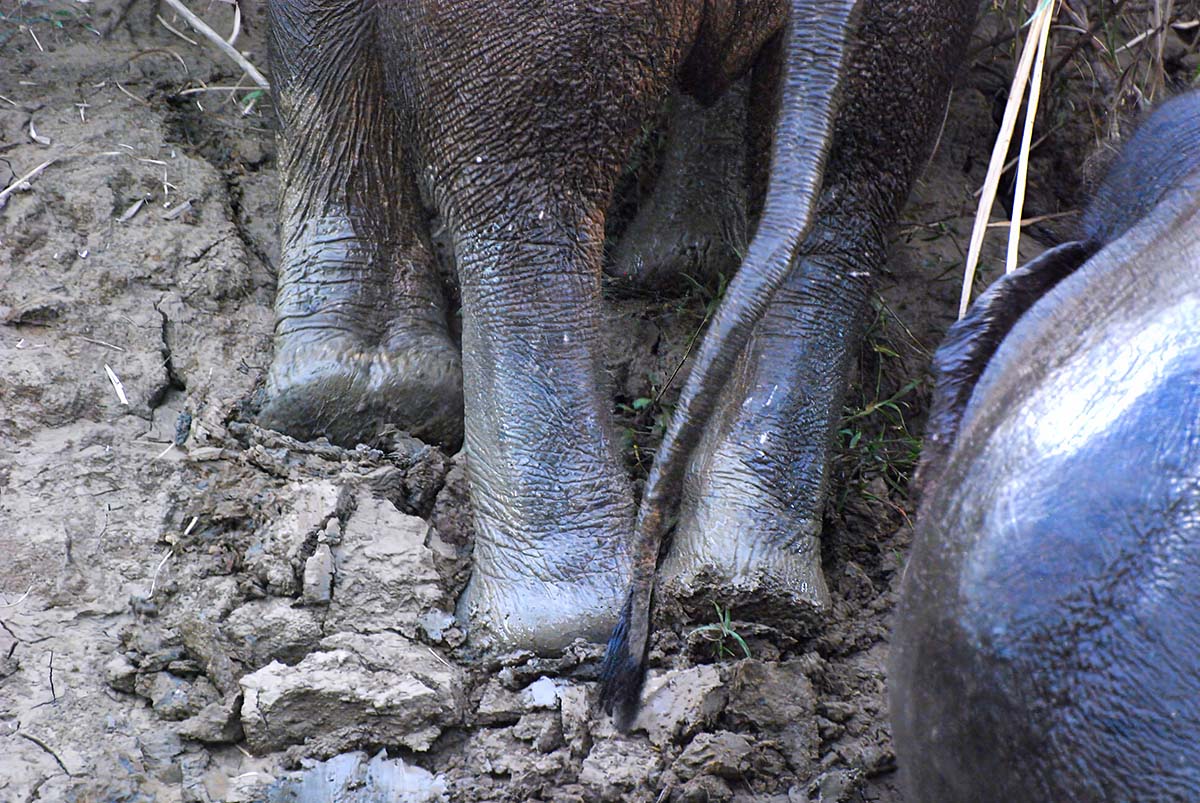
There, they construct foam nests over the water and lay their eggs inside. As soon as the tadpoles hatch, they glide out of the nest directly into the water below. The small, yellow-bellied Narrow-mouthed Frog (Chaperina fusca) even uses water-filled elephant footprints as a breeding site.
The Guarding Frog (Limnonectes finchi) displays an extraordinary strategy. It lays its eggs on land under leaves, where the male guards them. After hatching, the tiny larvae climb onto his back. From there, he carries them to a suitable small body of water—such as a wild pig wallow—and thus secures their start in life.
Why elephant conservation is species conservation
These examples impressively demonstrate how closely even seemingly completely different animal species are linked in the rainforest of Borneo. The conservation of large mammals such as the Borneo elephants therefore always means the conservation of many other, often overlooked species — and thus the preservation of a functioning ecosystem.
About the author
Alexander Haas is a renowned biologist and professor at the University of Hamburg. As the Head of the Herpetological Department at the Leibniz Institute for the Analysis of Biodiversity Change (LIB), he is an internationally recognized expert on the taxonomy and evolution of amphibians. With his fundamental research on biodiversity, Prof. Haas provides essential insights that directly serve species conservation.
Recommended reading: https://www.frogsofborneo.org/